Multiple connection types
Cable, fiber, fixed wireless, cellular and other available WANs can be evaluated for primary or backup roles.
A secondary connection helps only when routing, failover behavior, cellular signal, data limits and critical applications are understood. We design the transition between connections, not just the backup modem.
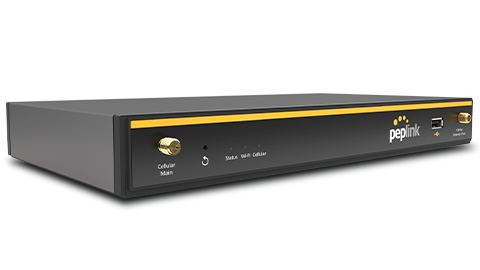
Cable, fiber, fixed wireless, cellular and other available WANs can be evaluated for primary or backup roles.
Health checks, failover timing, session sensitivity and return-to-primary behavior are configured around operational needs.
Carrier options, signal, antennas, data plans and placement affect whether LTE or 5G is a useful backup path.
Managed status and alerts can make an outage visible before a user reports that the connection has failed.
Identify critical applications and the operational cost of an outage.
Review available providers, existing network, cellular signal and installation constraints.
Select routing, WAN and optional SpeedFusion approaches appropriate to the requirement.
Install and test controlled failover and recovery before handoff.
Not necessarily. Some applications notice a public-IP or path change. Requirements should be tested, and bonding or tunnel options may be considered where appropriate.
It can when carrier coverage, antennas, power, data plans and environmental conditions support the design.
Resilience requires an alternate path, but it may be a second wired provider, cellular service or another available connection type.
Tell us about the property, users, devices, weak areas and operational requirements. Understory IT is based in Northern Virginia and considers regional projects across Virginia, West Virginia and Maryland.