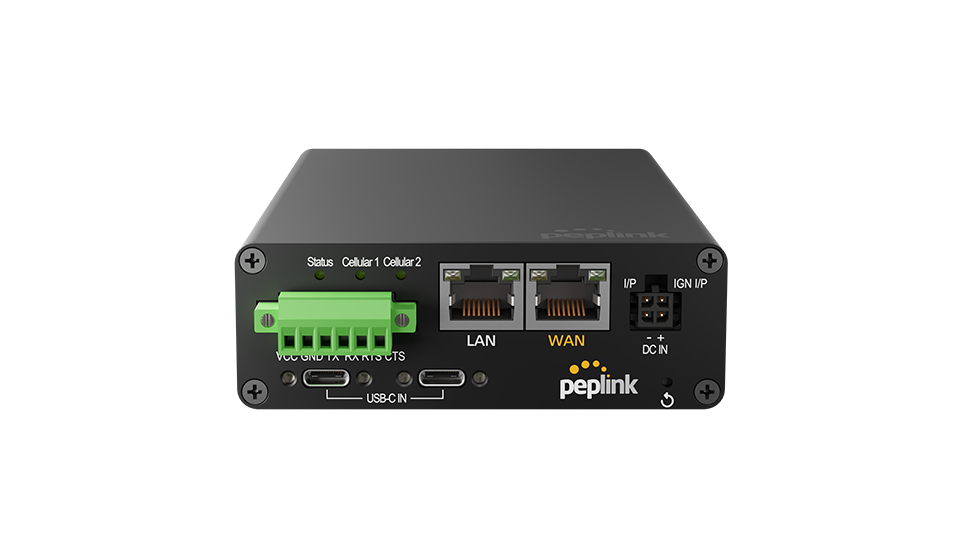
Basic failover and session continuity are different
With ordinary failover, the router detects a failed primary path and sends later traffic over a backup. Existing sessions may reset because their route or public address changed. That can be acceptable for web browsing but disruptive to voice, VPN, payment or remote-control traffic.
What SpeedFusion Hot Failover changes
Peplink describes SpeedFusion Hot Failover as maintaining secure tunnels over available WAN links so traffic can move to another healthy tunnel when a WAN fails. Compatibility, licensing, endpoint placement and the complete tunnel path must be confirmed for the selected hardware and service.
The backup link must fit the workload
A cellular or satellite backup needs enough capacity and suitable latency for the applications allowed to use it. Data limits also matter. A resilient design often prioritizes business-critical networks and restricts bulk updates, guest traffic or cloud backups during failover.
Detection settings affect behavior
Failure detection that is too slow delays recovery. Detection that is too sensitive can flap between links. Test complete outages, partial packet loss, DNS failure and degraded service rather than only unplugging one cable.
Define an acceptance test
Record which sessions should survive, maximum acceptable interruption, which networks may use backup capacity, how alerts are delivered and how service returns to the primary path. Run the test with the real application and both providers.
Common questions
Will dual-WAN keep every call connected?
Not automatically. Ordinary failover may reset existing sessions; continuity depends on the network design and application.
Does bonding simply add both advertised ISP speeds?
No guaranteed total should be assumed. Tunnel overhead, path quality, provider behavior and the selected feature affect results.
Can guest Wi-Fi be blocked during cellular failover?
Yes, policy can prioritize essential networks and restrict nonessential traffic when the backup has limited capacity or data.
Primary references
Product features and interfaces change. Confirm current compatibility and documentation before designing or purchasing equipment.