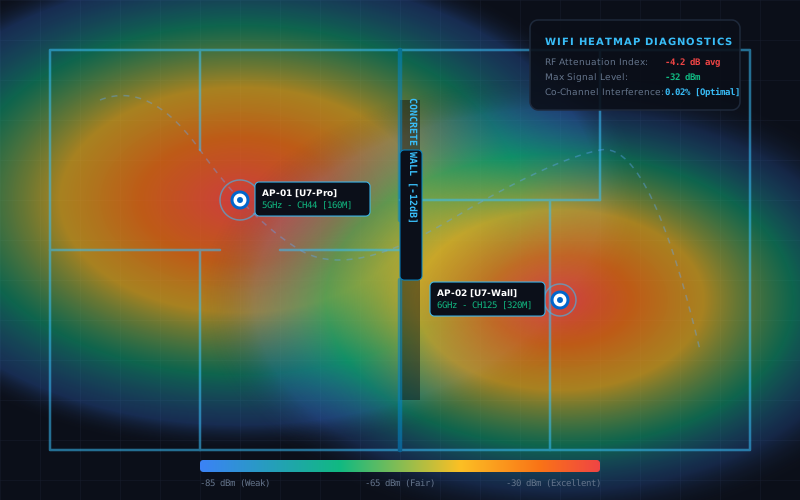
RSSI is signal level, not the whole experience
Received Signal Strength Indication is commonly shown in dBm. Values closer to zero represent a stronger received signal. RSSI helps reveal weak coverage, but two locations with similar RSSI can behave differently when one has more interference or contention.
SNR adds the noise floor
Signal-to-noise ratio compares the wanted signal with background noise. A usable signal can still perform poorly when the noise floor is high. That is why a survey should not be reduced to a single color legend or one target number.
Predictive and measured surveys answer different questions
A predictive survey estimates how walls, distance and access-point choices may affect coverage before installation. A measured survey records the real environment. Predictive work is valuable for planning; validation after installation is what reveals actual construction, interference and device behavior.
Roaming belongs in the test plan
The client device—not only the access point—affects roaming. Minimum-RSSI settings can encourage a device to leave a weak access point, but an aggressive universal value can create disconnects. Ubiquiti recommends gathering site-survey data and choosing values per access point rather than applying one number everywhere.
What a useful deliverable should show
A practical report identifies the floor plan and assumptions, access-point locations, bands and channel widths, representative signal or SNR layers, weak-use areas, cabling constraints and recommended validation steps. It should also state what was not measured.
Common questions
Is a predictive heatmap enough?
It is useful for design, but post-installation measurements are needed to validate the real building and radio environment.
Does stronger RSSI always mean faster Wi-Fi?
No. Noise, channel contention, device capabilities, backhaul and the internet connection can still limit performance.
Should every access point use the same minimum RSSI?
No. The appropriate value depends on coverage overlap, client behavior and measurements around each access point.
Primary references
Product features and interfaces change. Confirm current compatibility and documentation before designing or purchasing equipment.